Nvidia’s Quirky Microduck Robots Command 20,000 Preorders After Viral Keynote Debut
A fleet of open-source robotic ducks trained on Nvidia’s AI stack has surged in popularity, potentially challenging traditional holiday toy sales.
By Jayden Sweiler ·
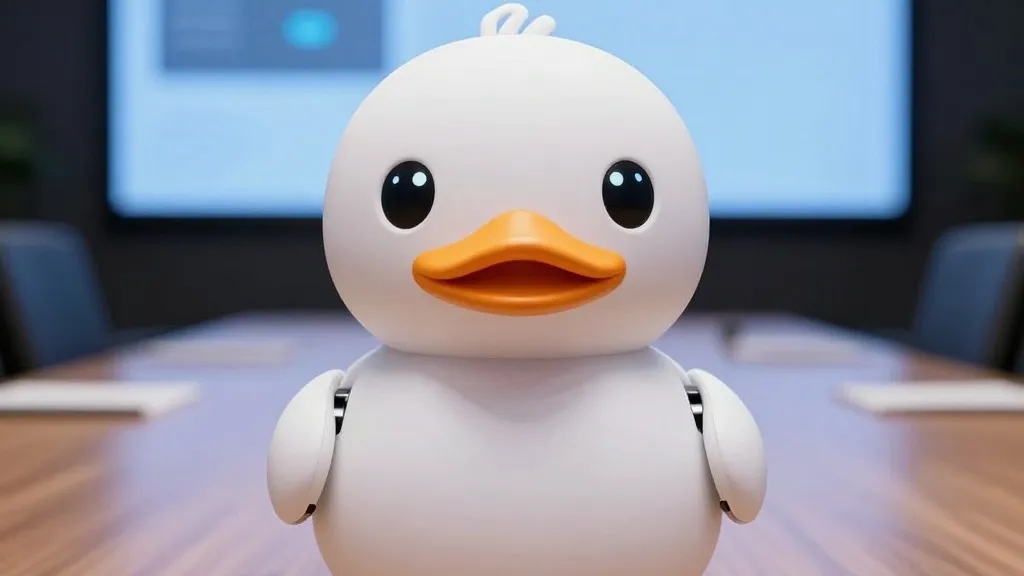
By the morning following Nvidia’s GTC Berlin keynote, preorders for a new line of robotic ducks had already climbed past 20,000 units, a figure that has quickly positioned the devices as a serious contender for the holiday season’s top-selling robot. The rapid uptake was confirmed by Clem Delangue of Hugging Face, who shared the milestone on social media, signaling that the consumer response to the product was immediate and robust.
The surge in interest can be traced directly to a viral video featuring Nvidia CEO Jensen Huang interacting with the Microducks during his address. In the footage, the small robots were shown executing a series of programmed behaviors, including waddling, sitting, and performing summersaults. They also produced high-pitched, R2-D2-like vocalizations and would occasionally collapse to the ground in a simulated nap. The combination of mechanical movement and endearing audio features appears to have captured the public imagination, driving significant pre-launch demand.
Delangue has suggested that these devices may ultimately become the best-selling robot of the year. He noted that while the units are marketed as toys, the promotional materials specifically feature adults engaging with them, hinting at a broader demographic appeal beyond children. With delivery timelines aligned for Christmas, the Microducks are poised to enter the market at the peak of consumer spending, raising questions about their ability to displace established holiday staples.
The origin of the Microducks reveals a complex corporate lineage that underscores Nvidia’s expanding footprint in the robotics sector. The devices are the product of Pollen Robotics, a company acquired by Hugging Face in 2025. Because Nvidia purchased Hugging Face in September of this year, the Microducks are now technically an Nvidia product, adding another layer to the GPU giant’s diverse portfolio of hardware and software solutions.
This is not Hugging Face’s first foray into physical robotics. The company previously released the Reachy Mini, another open-source robot designed for similar interactive purposes. The Microducks represent the second iteration in this line, continuing the company’s strategy of producing accessible, open-source devices that allow for community-driven development and customization.
Technologically, the Microducks rely on Nvidia’s proprietary technology stack for their core functionality. During the development phase, simulations of the robots were taught basic motor skills, such as walking, standing, and sitting, which are pre-loaded onto the units at shipment. This use of simulation-to-reality training is a hallmark of Nvidia’s approach to robotics, aiming to reduce the time and cost associated with physical prototyping.
A key differentiator for the Microducks is their open-source nature. Pollen Robotics has indicated that owners are not limited to the pre-installed tricks. Users can train their specific units to perform new movements and share these custom programs with the wider community. This modularity suggests that the robots may serve as a platform for hobbyists and developers, rather than just a static consumer toy.
The timing of the Microducks’ launch is notable in the context of the current AI landscape. The release comes just as the industry grapples with a series of high-profile cyberattacks, where AI involvement has been cited as a contributing factor in several incidents. Against a backdrop of concern regarding the risks of artificial intelligence, the Microducks offer a lighthearted counter-narrative, emphasizing the potential for AI to be playful and accessible.
However, the long-term success of the Microducks remains an open question. While the initial preorder numbers are impressive, they have yet to be converted into delivered units. The ability of the supply chain to meet Christmas demand, alongside the durability of the robots in real-world use, will be critical factors in determining whether this viral moment translates into sustained market performance. For now, the device stands as a curious intersection of corporate strategy, open-source development, and consumer sentiment.
Source: TechCrunch