Zadie Smith links cultural divisions to inequality in conversation with Dua Lipa
Speaking at the London literature festival, the novelist argued that worsening public services and economic insecurity have made cultural differences feel more threatening.
By Hot Chronicle Staff ·
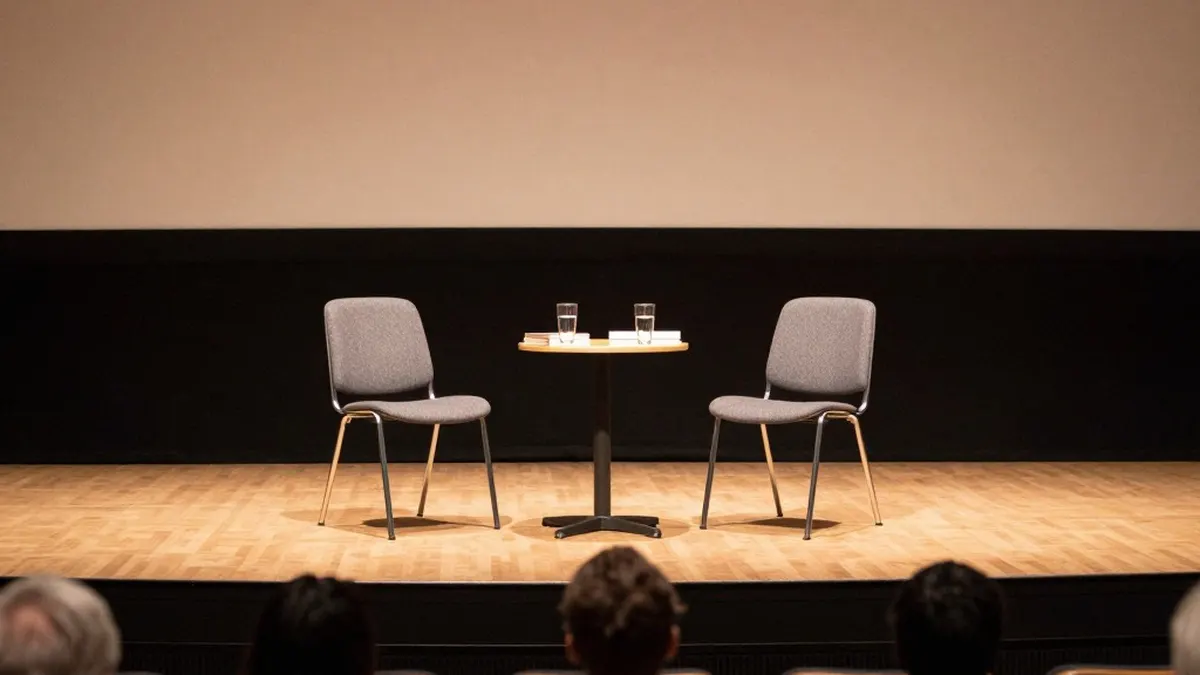
Zadie Smith has argued that growing inequality and the erosion of Britain’s welfare system have intensified cultural divisions, making differences between communities feel “existential”. In a conversation with Dua Lipa at the Southbank Centre’s London literature festival, the novelist linked those tensions to difficulties finding work and housing, alongside deteriorating schools and hospitals.
The discussion centred on Smith’s debut novel, White Teeth, published in 2000 and set largely during the final three decades of the 20th century. Lipa asked how views of multiculturalism had shifted since the 1980s and 1990s, and about immigration’s place as a dividing issue in British politics. Smith’s answer focused on inequality and unemployment, arguing that material circumstances shape how people respond to one another.
Smith said that when people have decent homes and confidence that healthcare will treat them as well as their wealthier neighbours, cultural differences can be interesting or irritating without becoming fundamental threats. She contrasted that security with circumstances in which jobs and housing are unavailable and public services are struggling. Suspicion of others, she argued, should be understood as an economic and structural issue.
White Teeth follows the Jones, Iqbal and Chalfen families in Kilburn and Willesden, the areas of north-west London where Smith grew up. Reflecting on that background, she credited her state education with giving her the ability to speak comfortably with anyone. Looking at her neighbourhood now, however, she described greater hardship, with people poorer and facing more difficult circumstances in the same schools and surroundings.
Smith called for “a nostalgia for the left”, while distinguishing between aspects of the past worth recovering and prejudices that should be rejected. She said there was no reason to want the racial prejudice or LGBTQ+ politics of the 1980s depicted in her novel. The healthcare, schools and education of that period were another matter. For her, the valuable inheritance was a functioning social democracy, which she suggested could work again if people wanted and believed in it.
The novelist also recalled completing White Teeth after a breakup, when she had moved back into her mother’s home. She began the book at 21, and it was published when she was 24. With friends urging her to join them for a Valentine’s Day night out, she finished the manuscript on 14 February and headed straight to a club. She jokingly attributed the disorder of the ending to that rush.
Lipa described learning to cope with both favourable and unfavourable reviews as one of her hardest challenges. Smith defended literary criticism as essential to developing taste, saying she remained interested even in negative assessments of her own writing when they were intelligent and well written.
Since White Teeth, Smith has published five further novels, as well as short fiction and nonfiction. Her latest book was the essay collection Dead and Alive. The London literature festival continues until 1 November, with Patti Smith, Malorie Blackman and Hisham Matar among the speakers chosen by Lipa, who also conducts monthly author interviews through her Service95 book club.
Source: The Guardian